

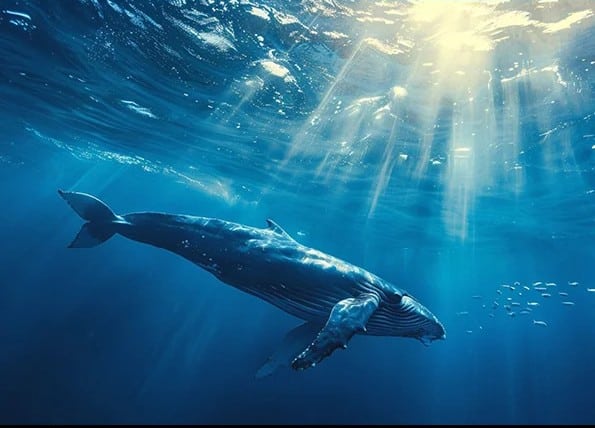
Underwater radiated noise (URN) is a central environmental challenge to our industry, due to the impact is has on the marine life and biodiversity. Our understanding of the challenge and the magnitude of it, is still at an early level, but existing studies and learnings from off-shore and the underwater drilling industry gives us an idea of the magnitude of it and the negative impact it has on marine life due to reliance on underwater sound for communication and feeding etc. Therefore, it is an issue that is high on the agenda at both the IMO level and in the individual organizations. The general agreement is, that the main source of problematic underwater noise from the vessels comes from the propellor and the cavitation of it. The challenge here is the likely tradeoff between the energy efficiency of the vessel and the noise profile, meaning that optimizing to reduce noise could potentially lead to a worse energy efficiency of the vessel – another central challenge to our industry and the transition of it.
It is therefore a topic that still deserves further attention and research, and we welcome al focus on the topic. Including in relation to noise (frequencies) we produce, what frequencies are a problem to different regional and seasonal wildlife and how we can reduce URN in a balance with our energy efficiency. A central key here is to not only look at the propellor and cavitation, but to look at it systemically in relation to rudder, hull design, coating etc.